
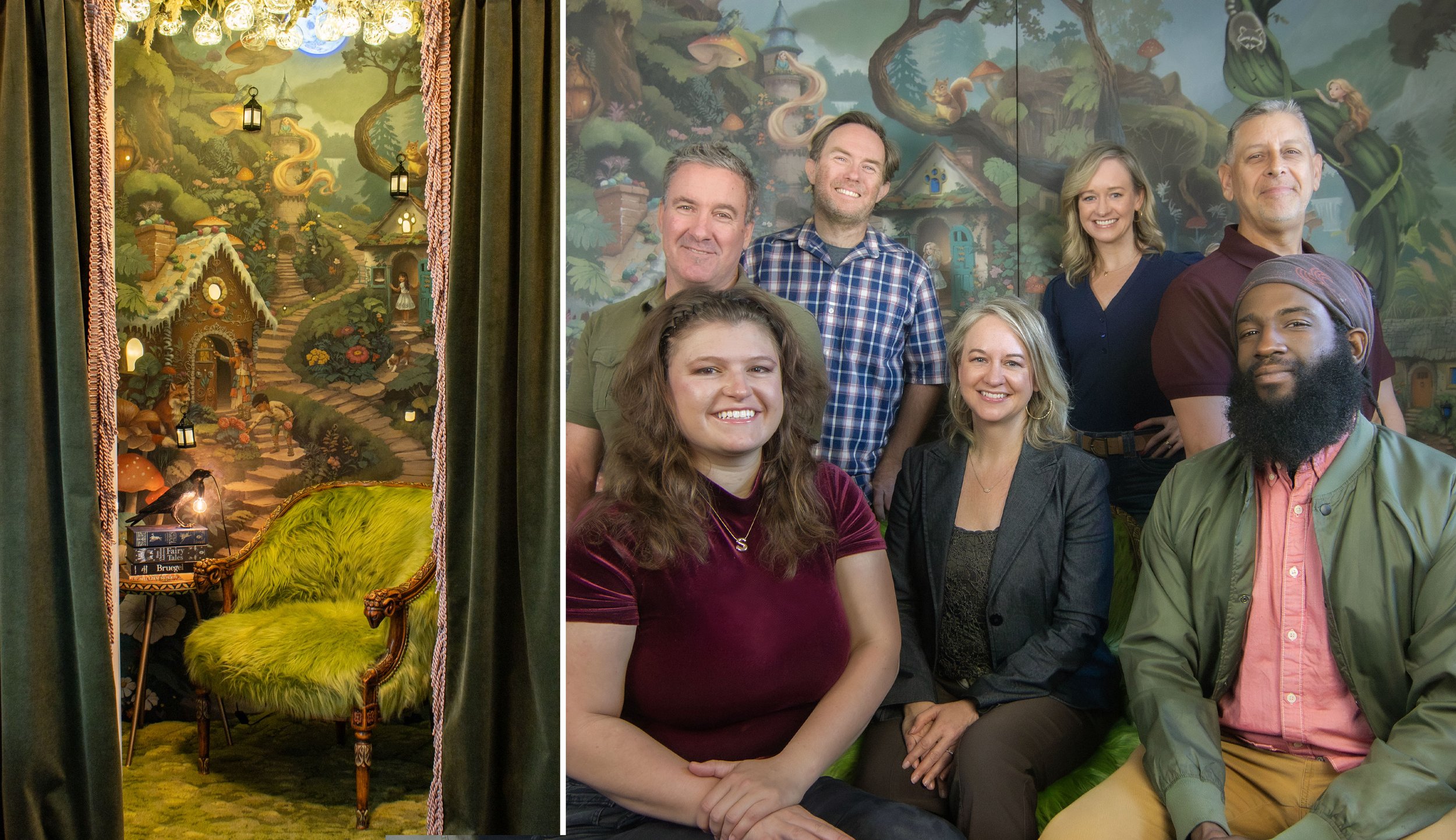
From Marketing And Networking To Designing A Room That Gets Noticed, Here’s What We Learned From Our First Year As Showcase Designers—And What We’d Do Again.
Our first Pasadena Showcase House of Design was an incredible opportunity to push ourselves creatively, connect with an audience, and learn from some of the best designers in the industry.
But we quickly discovered that Showcase is about much more than designing a beautiful room. From marketing and PR, to networking, vendor relationships, and creating a memorable experience for visitors, there’s a lot that happens behind the scenes.
There isn’t much information out there about what it’s actually like to participate in Showcase, so we’re sharing the lessons we learned, and the strategies that helped us make the most of our first year.
1. Have a Story. Make it Personal.
The most memorable rooms have a story behind them. For us, that meant creating a space rooted in nostalgia and imagination and letting that idea guide every design decision.
Having a clear emotional goal for the room helped us stay focused. We wanted people to feel something when they entered our space, not simply admire it.
Our takeaway: Start with how you want people to feel, then build the story and design around that feeling. And don't be afraid to make it personal. It’s your room, after all.
You may not get a chance to explain every detail to every visitor, but if you can at least share the brief story behind the space, people are more likely to remember it.
2. Design an Experience, Not Just a Room
One of the biggest things we learned was how much people responded to elements they could actually experience.
Our interactive elements (the chair, lanterns, audio, and other unexpected details) gave visitors a reason to stop, engage, take photos, and talk about the room.
It also reminded us to think beyond what people can see.
Our takeaway: Consider all five senses. What can people touch, hear, smell, or interact with? An immersive element can turn a beautiful room into a memorable experience.
And yes, think about the Instagram moment! Give people something they’ll want to photograph and share.
3. Think About How You’ll Talk to 1,000 People a Day
Showcase gives you an unusual opportunity: you get to interact directly with thousands of people who are walking through your work.
We quickly realized you can’t have a long conversation with everyone, but you can have a meaningful one.
Having a short script or a few key talking points prepared helped us quickly explain the story behind the room and point out details people might otherwise miss.
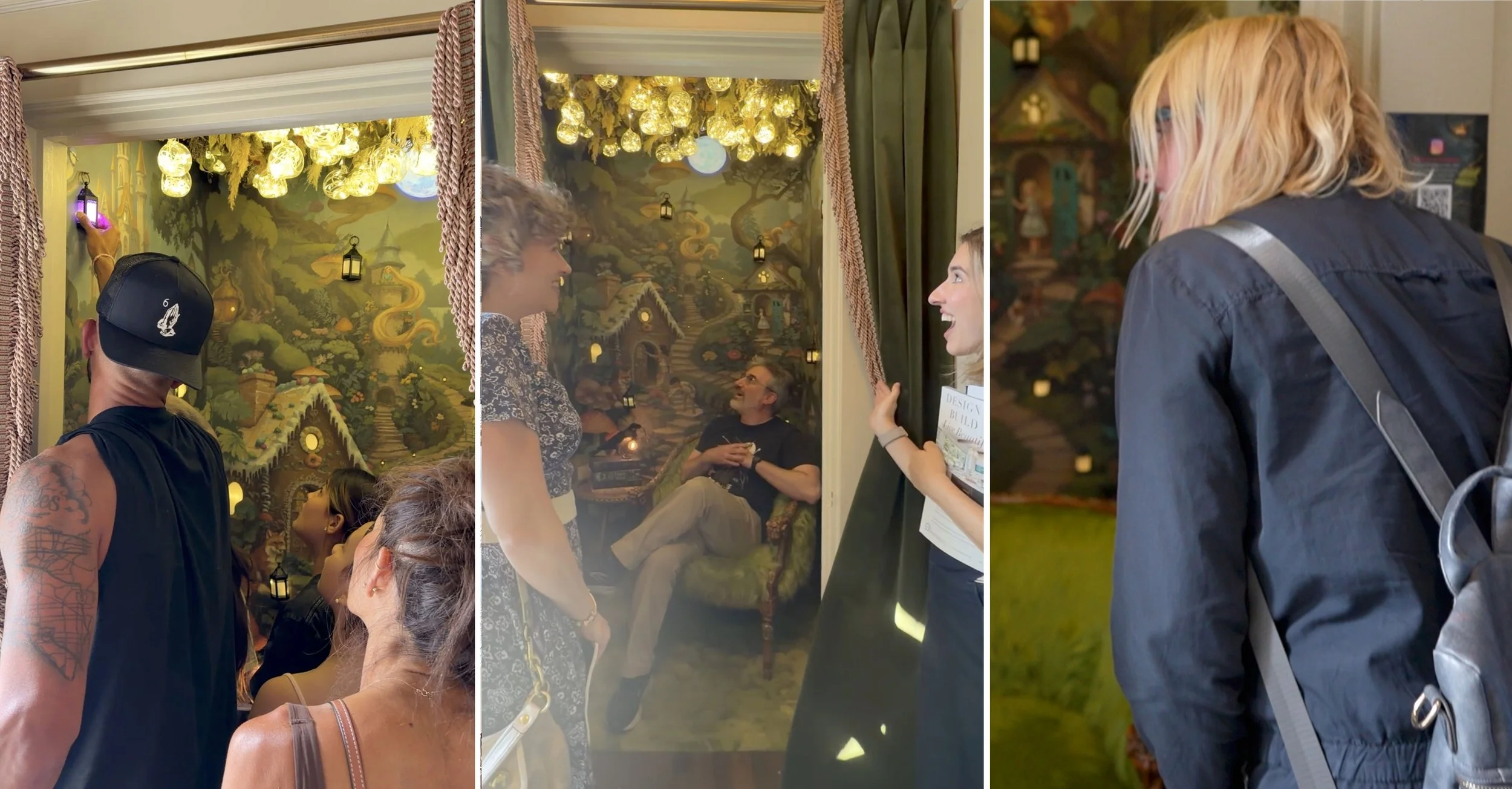
Our Takeaway: Know your story well enough to tell it in 30 seconds or less.
And most importantly, be ready to start talking. Don’t just stand in the corner and wait for people to approach you.
4. Give Visitors Something to Take Away (Beyond the Business Card)
Our booklet became an unexpectedly effective part of the Showcase experience. Instead of creating a traditional brochure, we wanted to make something people would actually want to take home.
We created The Enchanted Nook Doodle Book, an eight-page activity book inspired by the characters and storybook world within our mural. Each page invited visitors to get creative. For example, designing an underwater mural for the Little Mermaid’s castle bedroom. Or creating wallpaper for the Frog Prince, based on his and the princess’s favorite things.
The activities in the book gave visitors a way to interact with our work beyond simply looking at it. More importantly, it encouraged them to think about murals and custom artwork in their own spaces after they left Showcase.
We also used the booklet as an opportunity to introduce Hattas Studios, with a brief overview of our company and a link to our social media so visitors could see behind-the-scenes content about how we created the Enchanted Nook.
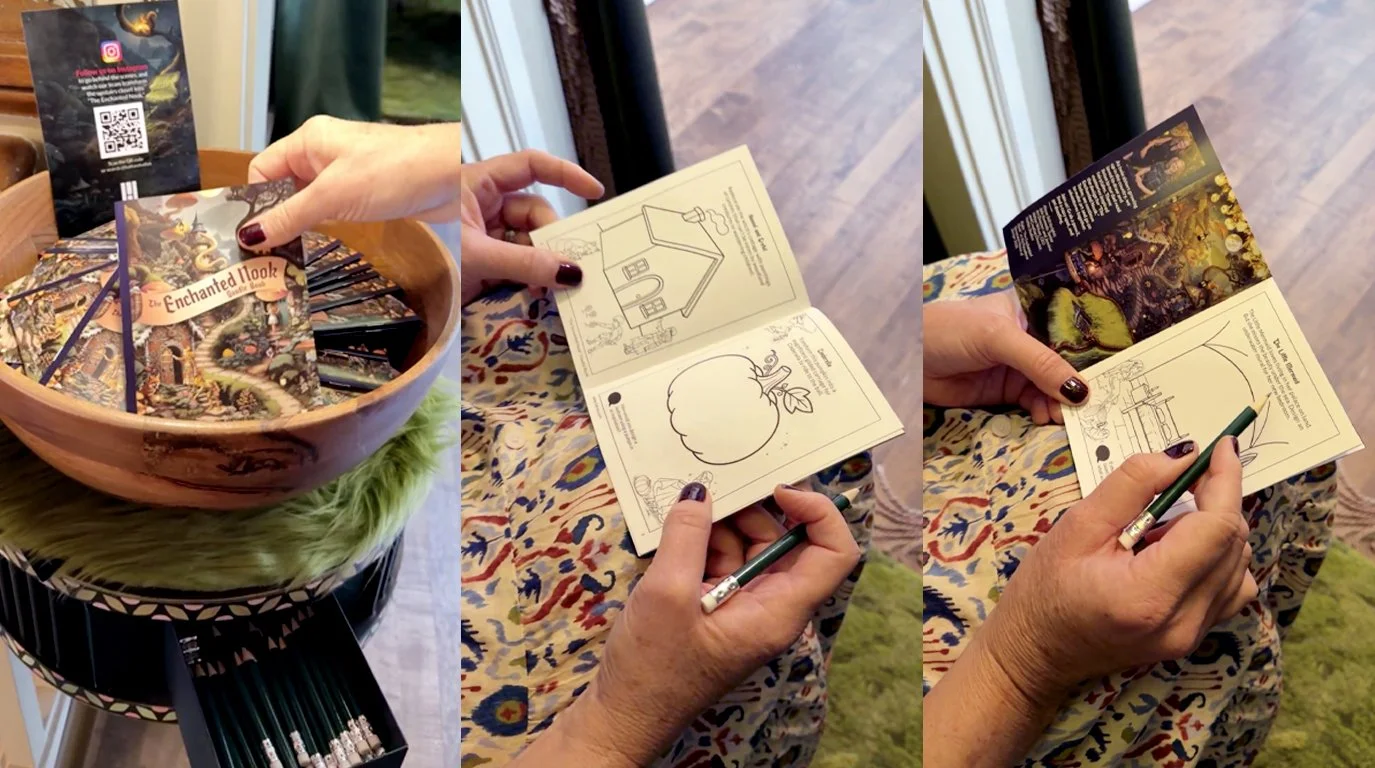
Our takeaway: Give people something they’ll genuinely want to take home – something that extends the experience beyond the room, reinforces your story, and keeps your work in their minds after they leave.
And make it easy for them to find you afterward. Your website, social media, contact information, and other next steps should be easy to access.
5. Decide What You Want People to Do Next
It’s easy to get caught up in attendance and compliments and forget that Showcase can also be a business-development opportunity.
Before the event, think about what you want someone to do after experiencing your room.
Do you want them to follow you on Instagram? Visit your website? Schedule a consultation? Purchase something? Contact you about a project?

Our takeaway: Give people a clear next step. A simple call to action can turn a great interaction into an actual relationship.
6. Build Relationships with the Other Designers
One of the greatest benefits of Showcase was getting to know the other designers.
We intentionally looked for opportunities to support one another, share information, and celebrate each other's work. The atmosphere became much more collaborative than competitive.
And that benefited everyone. When the Showcase as a whole is successful, every designer benefits.
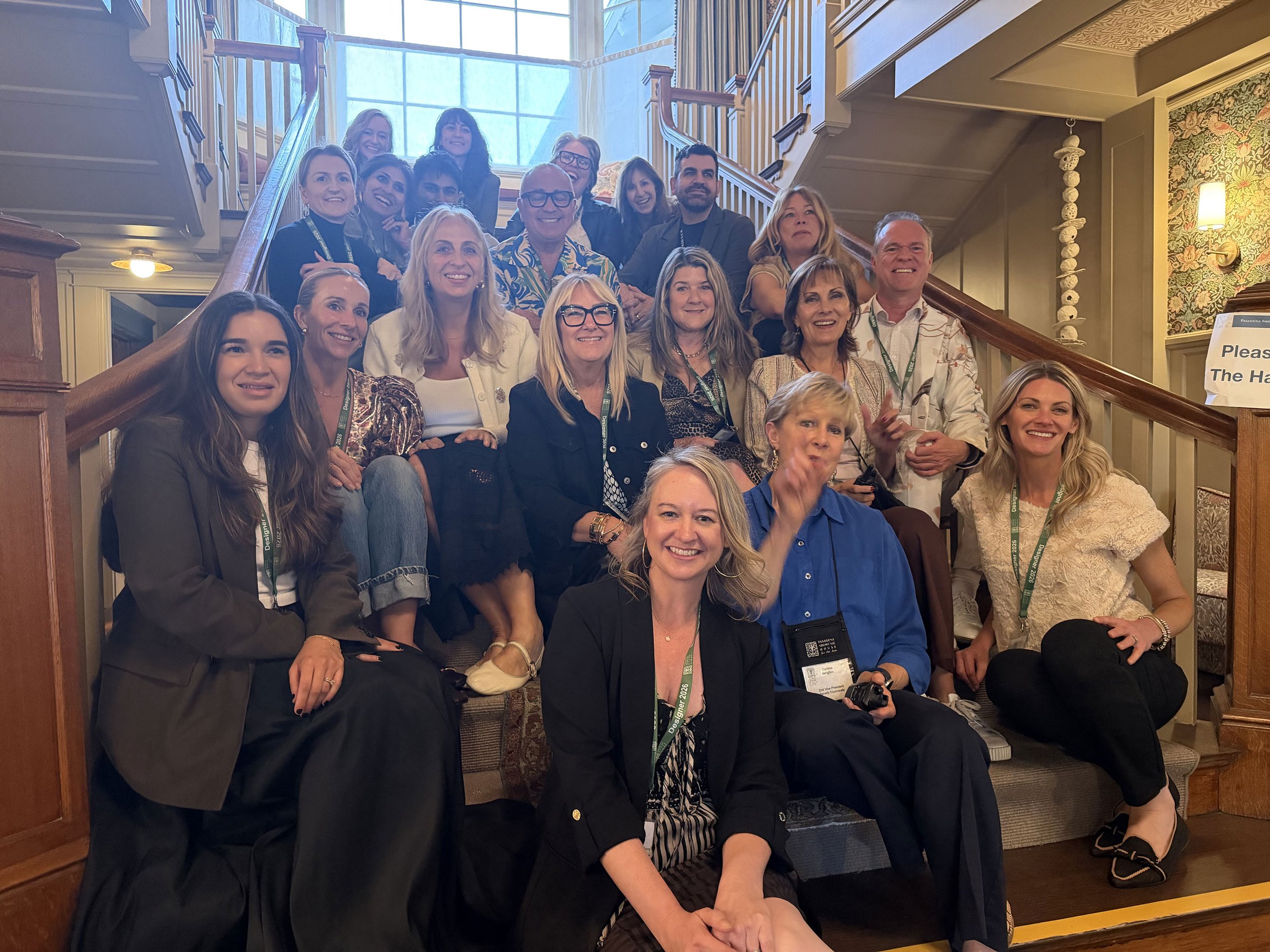
LEFT TO RIGHT, TOP TO BOTTOM: Julie Kennedy (Hattas Studios), Jill Romine (Jill Romine Interiors), Rock Zehler, Rhonda Angel (Rhonda Angel Interior Design), Iryna Helmy (Iryna Helmy Interiors), Ronnie Gor (Amorphous Studio), Ronnie’s Son, James Hernandez (James Hernandez Interior Design, Inc.), Joshua Praught (Studio Joshua), Carla Lane (Carla Lane Interiors), Lara Hovanessian (Blue Brick Design LLC), Karen Billman (Billman Designs), Maria Videla-Juniel (The Art of Room Design), Lydia Rubin (Benefit Chair), Steven Cordrey (Cordrey Collection), Noelle Djokovich (Gex Designs), Jeanine Hattas Wilson (Hattas Studios), Cindy Bengtson (Benefit Chair), Jamie Loren (Jamie Loren Home). INTERIOR DESIGNERS NOT SHOWN: Rebecca Hansen (Rebecca J Hansen Design Studio), Constance Flanigan and Christina Schwarzenegger (House of Pontovi), Ben Nichols (Ben Nichols), Barrett Cooke (Arterberry Cooke Architecture)
Our takeaway: Don't treat your fellow designers as competition. Treat them as colleagues and potential collaborators.
The supportive atmosphere also made for a better experience for attendees. And they noticed. We heard people comment on how welcoming and collaborative the designers were.
And you never know when you'll need a fellow designer to help turn on your lights, watch your room for a few minutes, or take a photo of you!
7. Support Your Vendors, and Make it Easy for Them to Succeed
Your vendors are investing their time, resources and creativity into Showcase, too. They’re there for the exposure and recognition, and designers have an important role in helping them get it.
We learned that supporting our vendors goes beyond simply thanking them. Keep their cards and information on hand so you can easily direct people to the businesses that helped bring your room to life. Include them in your social media by tagging them, highlighting their contributions, and sharing their work. Give them opportunities to be seen and celebrated.
And don't forget to invite your vendors to the Vendor Party. It’s a great opportunity for them to meet other designers and vendors, make new connections, and become part of the larger Showcase community. It’s also a meaningful way to show them that you appreciate the role they played in bringing your room together.

(SHOWN LEFT TO RIGHT, TOP TO BOTTOM): CHAIR AND CURTAINS UPHOLSTERY: Lauren Olipra. VOICE OVER ACTORS: Jonas Sansone (Narrator of "Little Red Riding Hood", Otter in "The Little Mermaid"; Johnny Turco(Wolf in "Little Red Riding Hood", Bird in "Rapunzel", Narrator in "Goldilocks and the Three Bears", Puppy in "Clara Baldwin and Her Own Fairy Tale"; Lauren Olipra (Red in "Little Red Riding Hood", Mother in "Jack and the Beanstalk", Narrator in "Rapunzel", Cinderella in "Cinderella"); Julie Kennedy (Narrator in "Hansel and Gretel", Fairy Godmother in "Cinderella", Rapunzel in "Rapunzel"); Vlad Peters (Hansel in "Hansel and Gretel", Narrator in "Clara Baldwin and Her Own Fairy Tale"); Megan Reisberg (Gretel in "Hansel and Gretel", Goldilocks in "Goldilocks and the Three Bears", Princess in "The Frog Prince", Mermaid in "The Little Mermaid"); Jodi Dennithorne (Witch in "Hansel and Gretel", Jackie in "Jackie and the Beanstalk", Narrator in "The Little Mermaid", Clara in "Clara Baldwin and Her Own Fairy Tale”); Mitchell Roché (Narrator in "The Frog Prince", Narrator in "Cinderella"); Adam Wasser (Frog in "The Frog Prince", Narrator in "Jackie and the Beanstalk"
Our takeaway: Think of your vendors as partners, not just suppliers.
Look for ways to give them recognition throughout the Showcase experience. Share the love, celebrate their contributions, and help them make valuable connections. When your vendors feel supported and appreciated, everyone benefits. And those relationships can continue well beyond Showcase
8. Show Up. The Parties are Part of the Experience
Showcase isn't just about the rooms.
The events, parties, gatherings and informal conversations are where a lot of the relationship building happens. We learned that simply showing up and being willing to talk to people can lead to valuable connections.
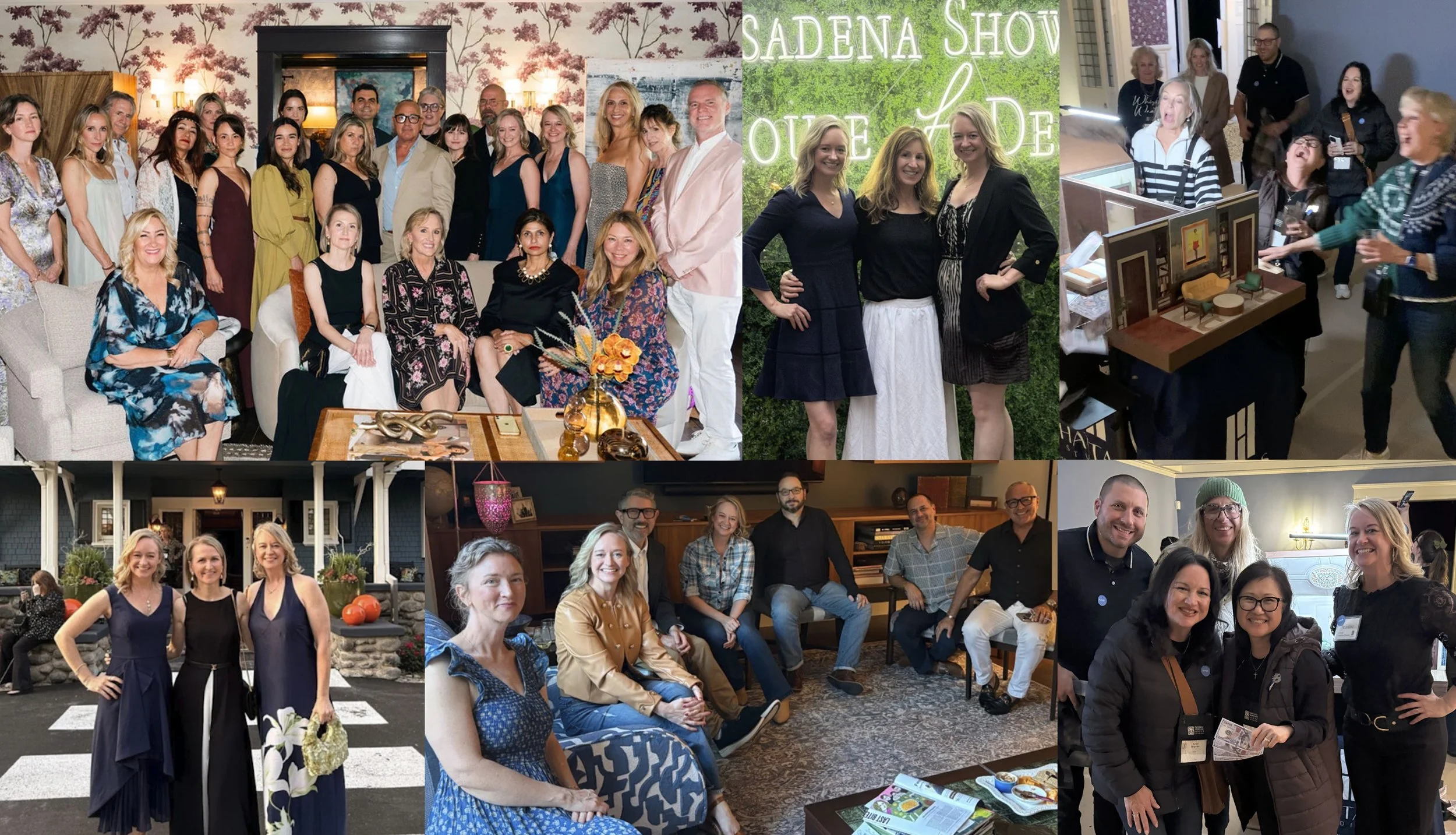
Our takeaway: Put networking on your calendar just as intentionally as you put your design work on the calendar. You never know who you'll meet, what you'll learn, or where a conversation might lead.
9. Have a Marketing Plan Before Showcase Begins
Showcase creates an incredible number of marketing opportunities, which can become overwhelming very quickly. There are media opportunities, social media, networking events, photography, video, printed materials, vendor relationships, and countless ideas for how to promote your room.
Before Showcase begins, take a step back and determine what you want to accomplish by participating.
Do you want to attract new clients? Build relationships with other interior designers? Increase brand awareness? Generate media exposure? Grow your social media following? Sell a product? Establish yourself in a new market?
Once you know your goal (or goals) work backward to determine the strategies and tactics that will help you get there.
For us, one important strategy was taking full advantage of the PR opportunities created by Pasadena Showcase. Shaun Thompson did an incredible job coordinating media visits and generating attention for the Showcase and its designers. Her efforts brought valuable exposure to our room, and we saw firsthand how powerful that exposure could be.
But we also knew we needed to be prepared to capitalize on those opportunities. We created a media kit with press releases and information about our room that we could provide to members of the media. We also created a dedicated press landing page where journalists could easily find and download everything they might need, including high-resolution photos, videos, press materials, and information about Hattas Studios.
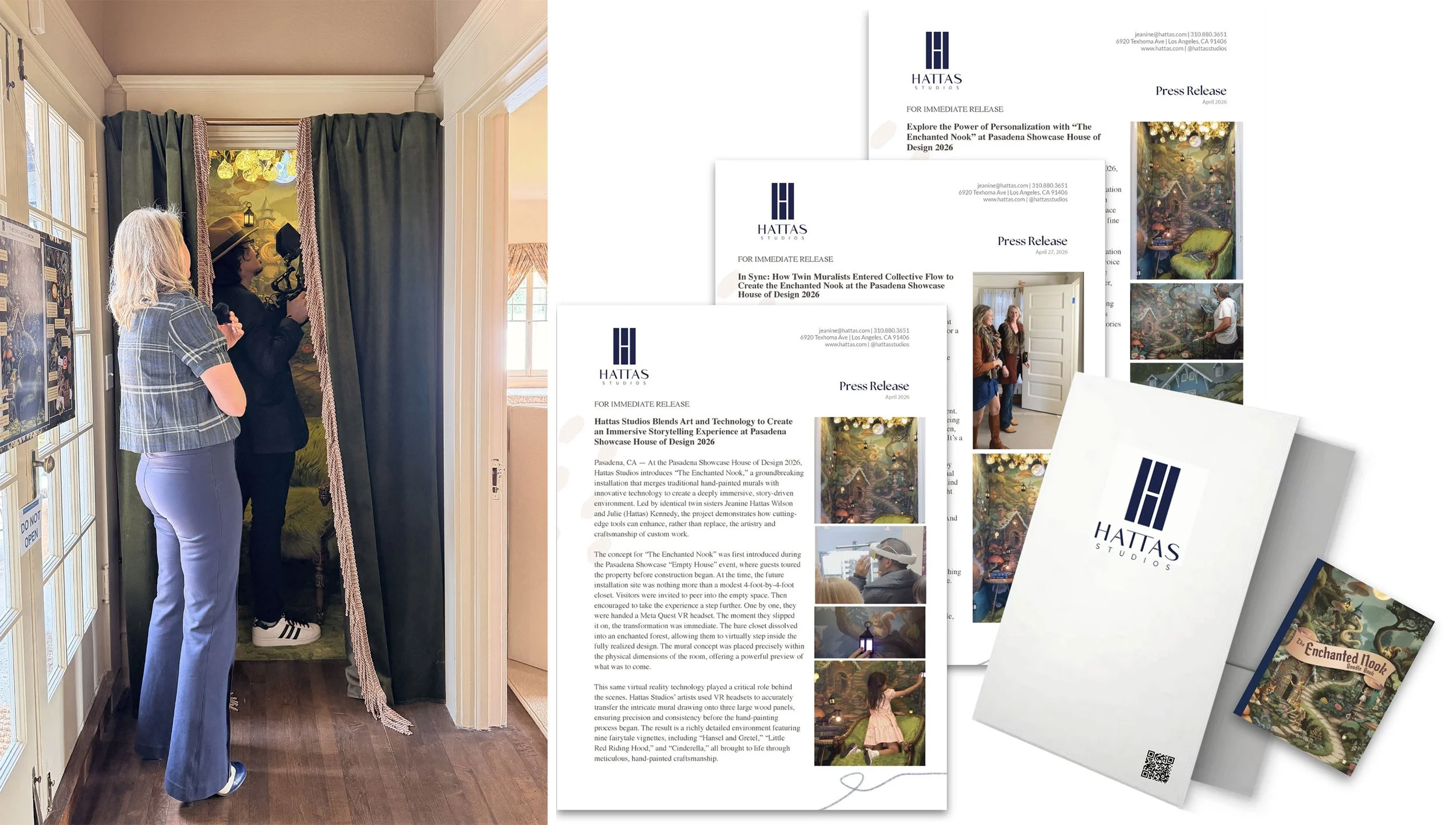
Showing up for Media Days was another important part of the strategy. We made sure we were available, prepared with a clear message, and ready to talk about what made our room unique. When media interest came our way, we wanted to make it as easy as possible for them to tell our story.
This is where having a strategic plan becomes so valuable. Once you know what you're trying to accomplish, you can identify the opportunities that will actually help you get there, and prepare for them in advance.
Having a plan also helps prevent initiative overload. If you're a designer who tends to come up with a million ideas (we can relate!), it can be tempting to try to do everything. But not every good idea is going to move you closer to your goals.
Our takeaway: Decide what success looks like before Showcase begins, then build your marketing plan around it.
Think about it as Goal → Strategy → Tactics. This simple framework can help you focus your time, make smarter decisions about which opportunities to pursue, and ultimately get more out of your Showcase experience.
10. Plan for the Reality of Being There
One of our biggest practical lessons was time management.
Showcase requires a significant commitment of time, but your business doesn't stop running just because you're participating. You want to be present in your room and take advantage of every opportunity, while still keeping your regular work moving.
We had a team that could rotate days and responsibilities, while other designers relied on family members or friends to help staff their rooms.
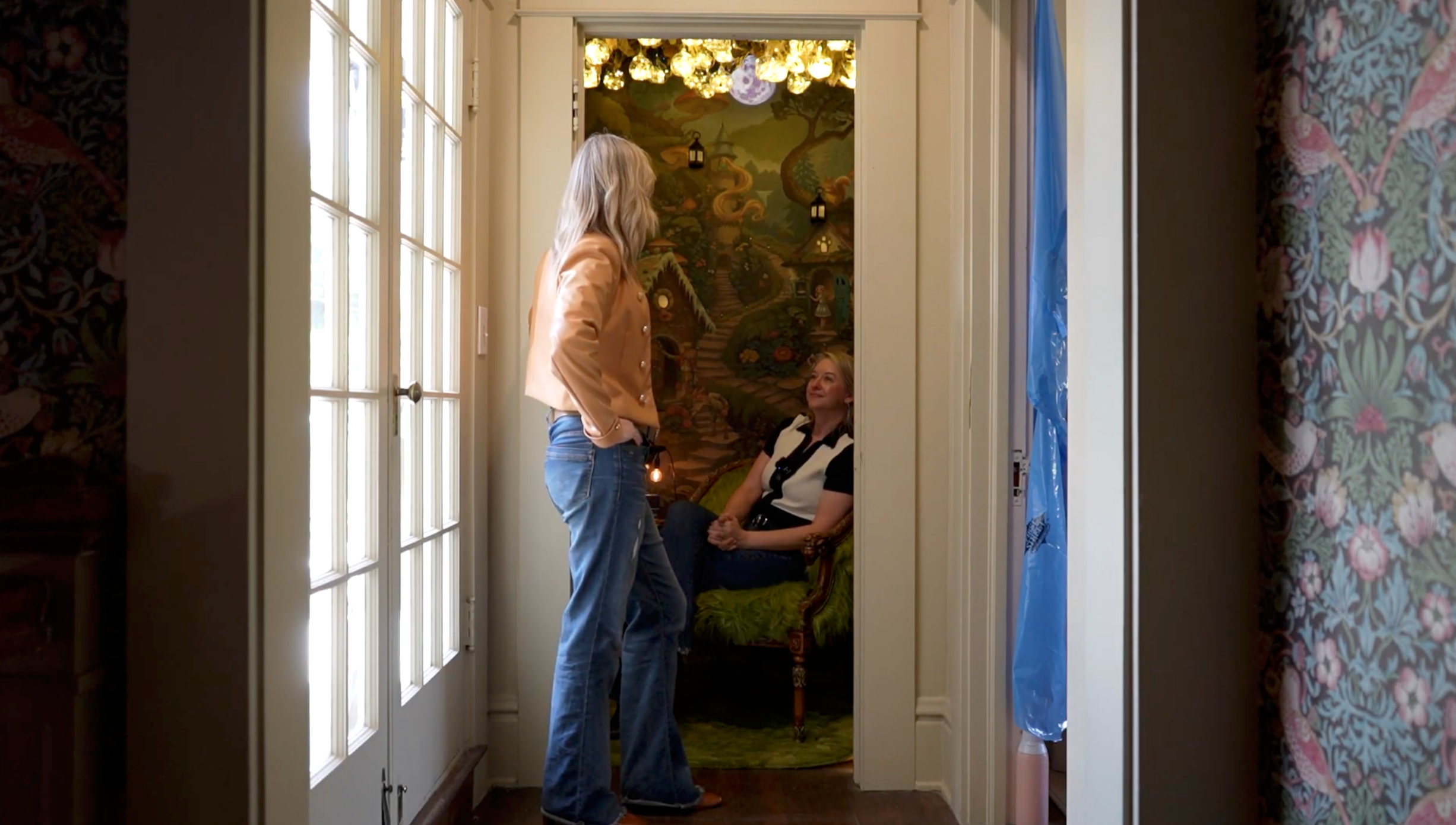
Our takeaway: Figure out your coverage plan before Showcase begins.
Have people you trust who can give you breaks, cover your room, and help you step away when you need to. The goal is to be present enough to make the most of the experience without burning yourself out.
What We’re Taking Away from Our First Showcase
Our first Pasadena Showcase House of Design experience taught us that a designer showhouse is about so much more than designing a beautiful room.
It’s an opportunity to experiment, tell a story, connect with an audience, build relationships, learn from other designers, support industry partners, and introduce your work to new audiences.
We learned that the designers who get the most out of Showcase are intentional about the entire experience, not just the room. A strong story, memorable details, strategic marketing, PR, networking, and vendor relationships can turn a design project into a much bigger business opportunity.
For us, the greatest success was seeing how many connections and opportunities grew from our room. We met designers, connected with potential clients and vendors, received valuable media exposure, and challenged ourselves creatively.
Our biggest takeaway? Think beyond the room. Decide what you want Showcase to accomplish, create a plan to get there, and then make the most of every opportunity that comes your way.
Watch Our Full Master Class with a Behind-the-Scene look at the Enchanted Nook at Pasadena Showcase 2026
In this behind-the-scenes tour, we’re taking you through the entire creative journey—from initial inspiration to final installation—and sharing how our team of artists brought this one-of-a-kind space to life. With tens of thousands of visitors captivated by this magical room, we’re so honored to have created an experience that sparks awe, nostalgia, and imagination. And we can’t wait to participate in upcoming showcases!
Have an idea for a mural? Let’s collaborate!
Subscribe to the Hattas Studios Newsletter
Sign up to receive art tips, inspiration, behind-the-scenes stories, and special promotions right in your inbox.